English


Flow Meters and Nozzles For Wastewater Treatment
The Significance and Scope of Wastewater Treatment
Wastewater treatment serves as a critical link between ecological conservation and industrial production, with its primary purpose being to reduce water pollutants, prevent soil and water contamination caused by direct wastewater discharge, and maintain aquatic ecosystem balance. It also enables the recycling of water resources, lowers production water extraction costs, complies with environmental regulations, mitigates pollution penalty risks, improves workplace conditions, safeguards employee health, and supports sustainable industrial development.
The treatment system addresses various wastewater sources:
industrial sources include acidic/alkaline wastewater, heavy metal wastewater, and oily wastewater generated from electroplating, steelmaking, and PCB manufacturing;
domestic sources encompass household sewage
additional sources comprise vehicle washing wastewater and rainwater collected from industrial sites.
The treatment process employs tiered purification techniques targeting suspended solids, acidic/alkaline substances, heavy metal ions, and organic compounds.
After meeting regulatory standards, the treated water can be discharged or reused for applications such as production spraying, equipment cooling, and site cleaning, achieving wastewater reduction, detoxification, and resource recovery.
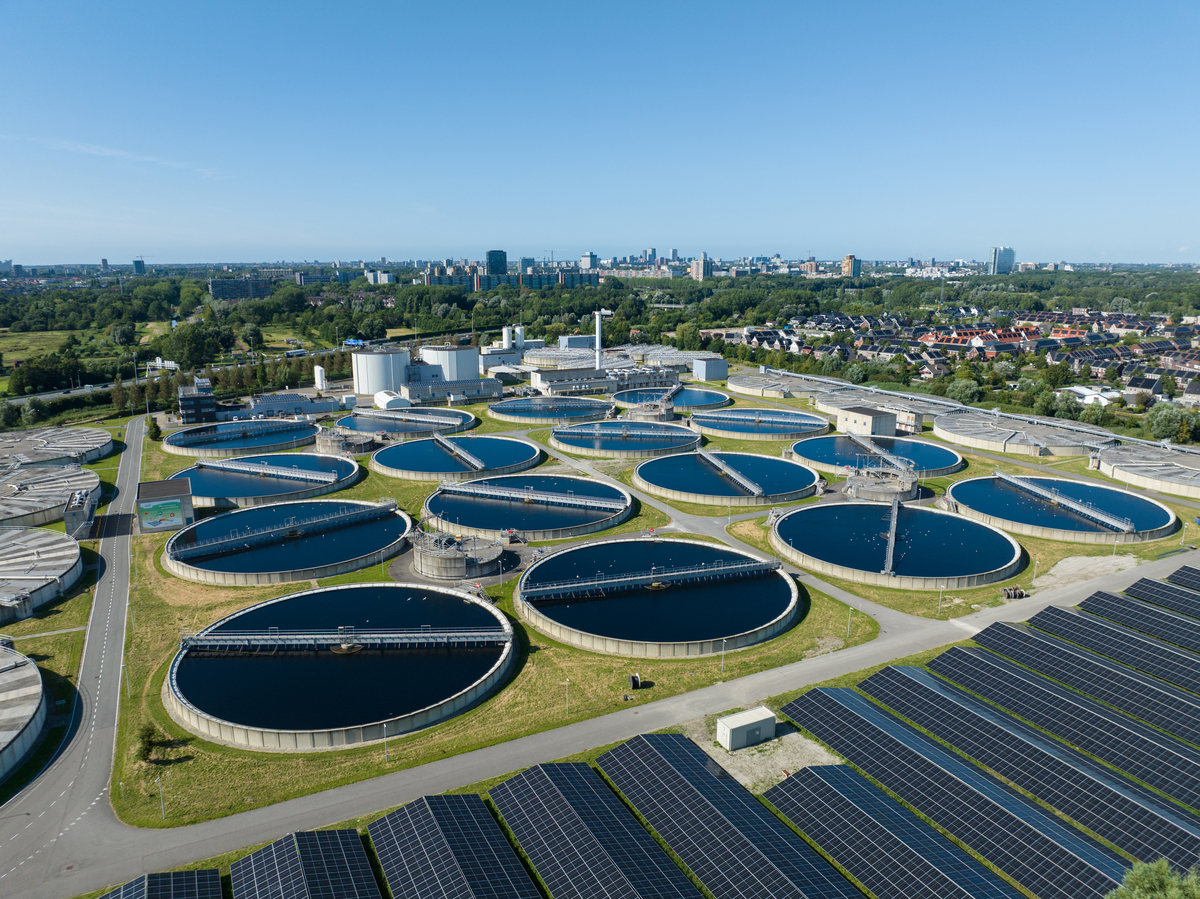
Main wastewater treatment processes and staged treatment steps
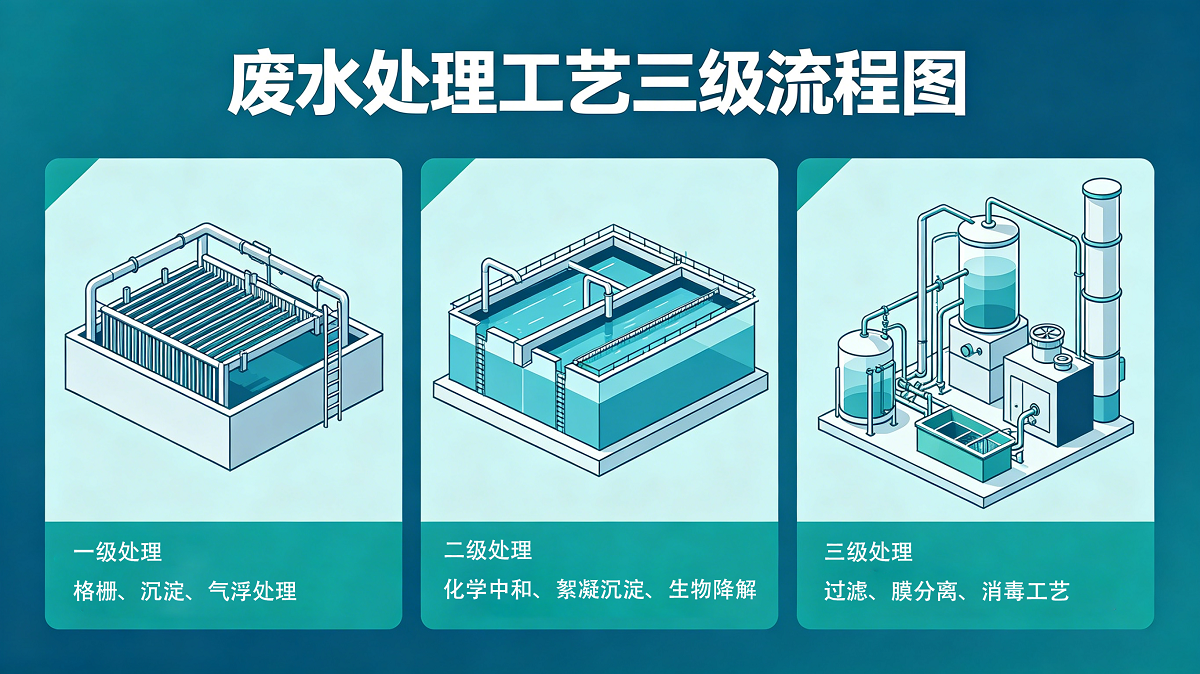
Current mainstream wastewater treatment primarily employs three categories of processes: physical, chemical, and biochemical methods, progressing through a tiered purification sequence that includes pretreatment, secondary treatment, and advanced treatment.
The primary pretreatment employs physical processes—including screens, sedimentation, and air flotation—to remove large particulate impurities such as silt, floating debris, and oil from the water. This step initially reduces water turbidity and alleviates the treatment load for subsequent processes.
The secondary treatment combines chemical neutralization, flocculation and sedimentation with biological degradation to regulate the pH of the water body, add chemicals to coagulate heavy metals and colloidal pollutants; utilize microorganisms to decompose organic pollutants, significantly reducing the concentration of harmful substances and essentially meeting conventional discharge standards.
The tertiary advanced treatment employs filtration, membrane separation, and disinfection processes to further remove residual trace impurities, ions, and pathogens.
The treated water quality meets discharge standards as required and can also be reused for production cooling, spray cleaning, and other applications.
The multi-stage treatment system ensures layered purification, effectively handling various industrial and domestic wastewater streams while meeting both environmental discharge standards and water resource recycling requirements.
Flow Control of Inlet and Outlet Water: Practical Application of Flow Meters in Wastewater Treatment
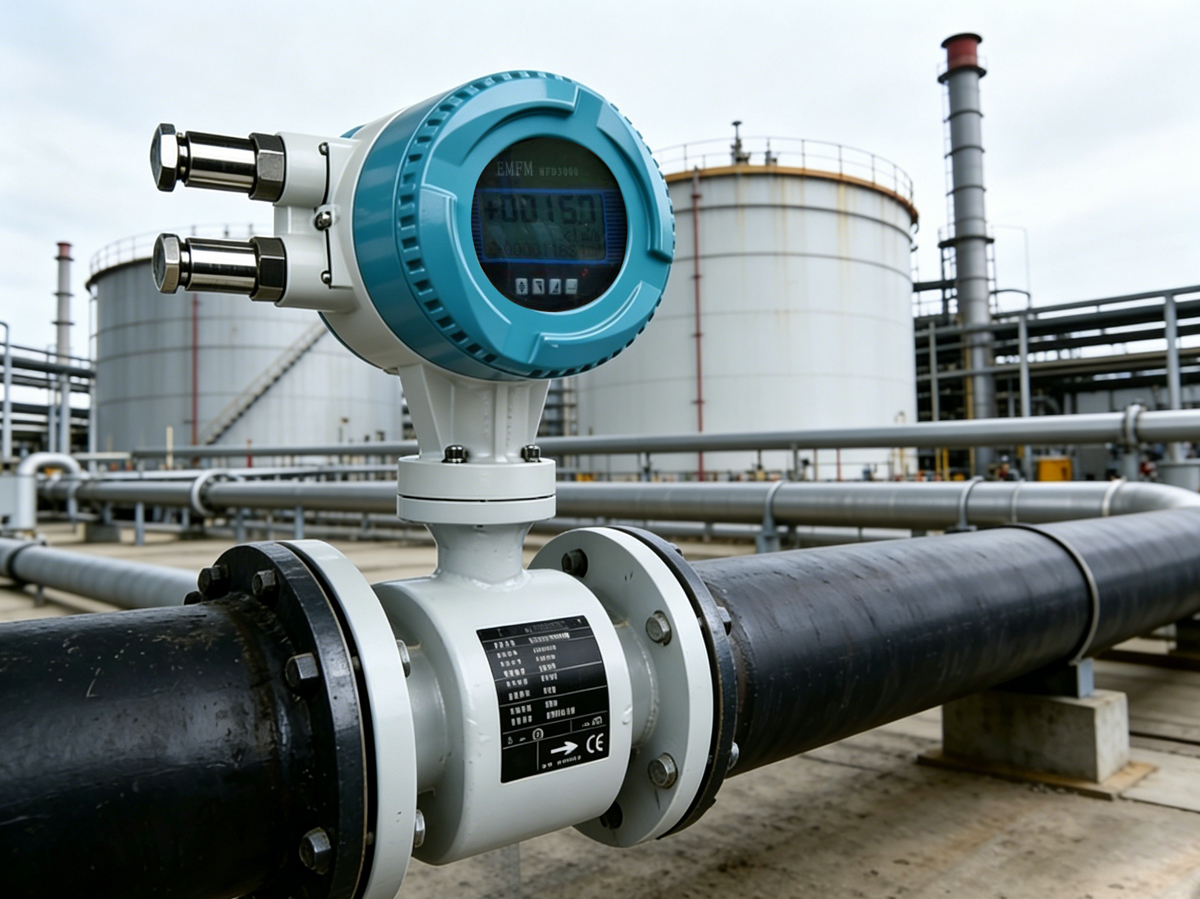
The flow meter serves as the core equipment for water volume control in wastewater treatment plants, monitoring flow rates throughout the entire process—from influent intake to treatment and effluent discharge—to ensure stable operation of the treatment system.
The influent end utilizes a flow meter to continuously monitor the total volume of sewage inflow, enabling accurate prediction of water load. This facilitates optimal allocation of treatment chemicals and aeration power, preventing sudden fluctuations in water volume from impacting the treatment system. During the treatment process, precise monitoring of the dosing flow rates for acid/alkali solutions and flocculants ensures automatic chemical dosing based on water quality parameters, thereby stabilizing neutralization and sedimentation reactions while minimizing chemical waste.
The aeration and circulation pipelines utilize flow meters to regulate water return flow and air supply, ensuring an balanced microbial environment and enhancing pollutant degradation efficiency. The discharge outlet measures compliant effluent volume, with retained data meeting environmental monitoring and reporting requirements.
The device can simultaneously detect pipeline blockages and leakage anomalies in real time, thereby reducing operational maintenance costs. Leveraging precise flow control, the quality of wastewater purification remains consistently manageable, ensuring compliant discharge practices within the facility while achieving water conservation, energy efficiency, and optimized operational performance.