English


Flow Meters and Nozzles for Car Wash
The overall structure and complete operating principle of the fully automatic
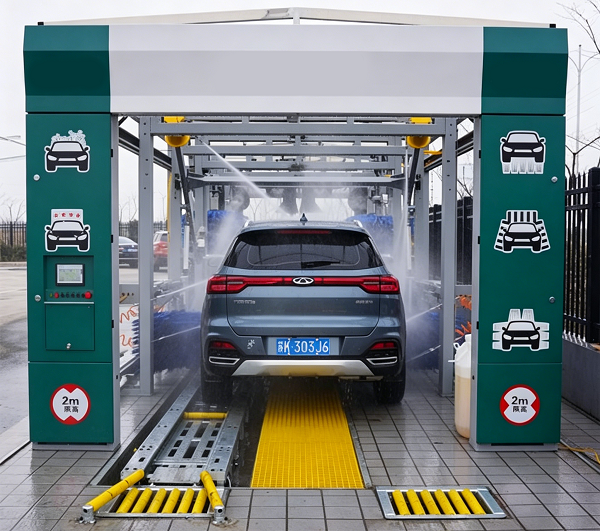
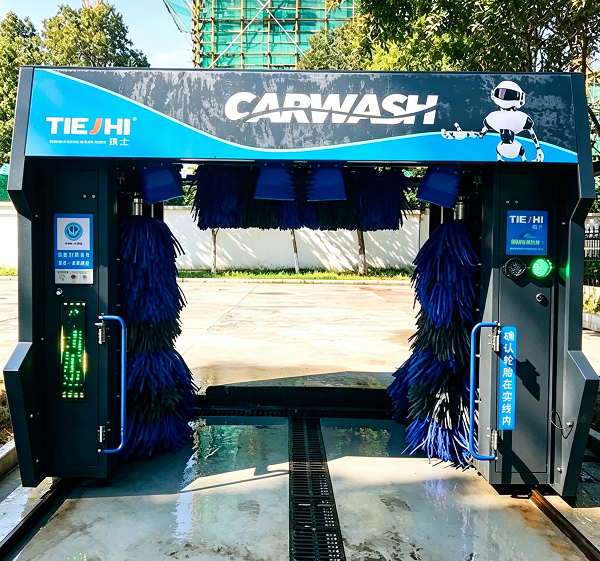
The fully automatic car washer is an automated cleaning equipment integrating mechanical structures, fluid control systems, and electrical control systems. Its main components include a frame travel mechanism, high-pressure spray system, foam spraying system, air drying system, as well as sensor detection and intelligent electrical control systems. Featuring a modular design and high degree of automation, it requires no manual intervention and can perform standardized vehicle cleaning operations.
The operating principle relies on an electronic control system to coordinate the entire machine's operation:
The equipment uses sensors to identify the vehicle's position and body contour, accurately locating the cleaning area.
The high-pressure spray system then atomizes high-pressure water through nozzles to wash away mud and stubborn stains from the vehicle's surface, followed by application of specialized car wash foam to soften and dissolve contaminants.
After completion of the scrubbing process, the equipment rinses with clean water to remove foam residues.
Finally, the air drying system activates, utilizing high-pressure airflow to dry off water stains.
The entire process employs flow meters to precisely control water and foam flow rates, combined with the machine frame's uniform movement, enabling comprehensive, automated cleaning of the entire vehicle with no blind spots. This significantly enhances washing efficiency while ensuring consistent and stable cleaning results.
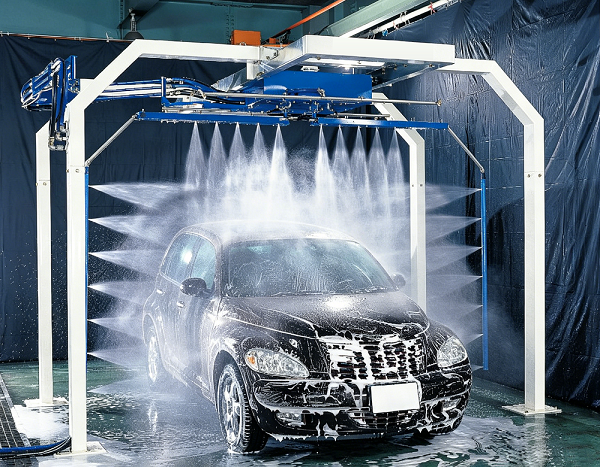
Which is more suitable for daily use: fully automatic mechanical car washing or self-service car washing?
Both fully automatic mechanical car washes and self-service car washes offer distinct advantages, catering to the daily vehicle cleaning needs of different car owners.
Fully automatic mechanical car washes:
utilize intelligent electrical controls, fluid spraying systems, and sensor technology to operate entirely autonomously—no manual intervention is required; the entire process—including rinsing, foam generation, cleaning, and drying—is completed automatically once the vehicle has come to a complete stop.
Their benefits include time and labor savings, consistent cleaning standards, and high reliability, making them ideal for daily commuters and drivers who prioritize convenience and efficiency. However, these systems feature fixed water pressure, limited cleaning effectiveness for fine details, and relatively higher per-service costs.
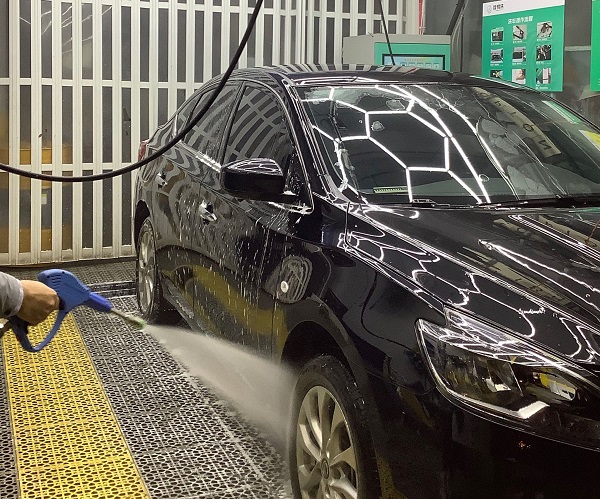
Self-service car washes are equipped with independent water guns, foam, and water supply systems:
allowing vehicle owners to operate them independently for targeted cleaning of hard-to-reach areas such as wheel hubs and crevices, ensuring more thorough cleaning at a cost-effective price.
The drawbacks include longer processing times and manual operation, which require good dexterity. In summary, for daily, high-frequency basic maintenance, fully automatic mechanical car washes are the preferred choice due to their time efficiency and convenience; for periodic, in-depth cleaning, self-service car washes offer a balance between cleaning quality and cost-effectiveness.
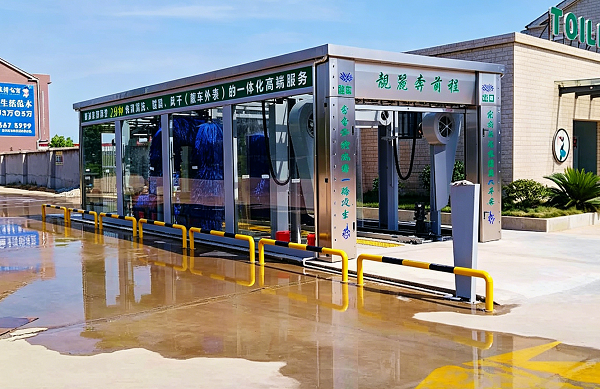
How to distinguish between tunnel-type and reciprocating-type car washers and how to select the appropriate model
Tunnel-type and reciprocating-type are the mainstream fully automatic car wash systems available on the market. They differ significantly in structure and operating principles, making them suitable for various operational scenarios.
Tunnel-type car wash machines feature a longer body design; vehicles enter while stationary, moving smoothly along the conveyor belt, while the equipment remains stationary. Continuous operation is achieved through multiple spray and brush modules, enabling fast cleaning speeds and high throughput for uninterrupted vehicle washing. However, these machines occupy considerable space and are more expensive, making them better suited for gas stations with heavy traffic volumes or large-scale car wash facilities.
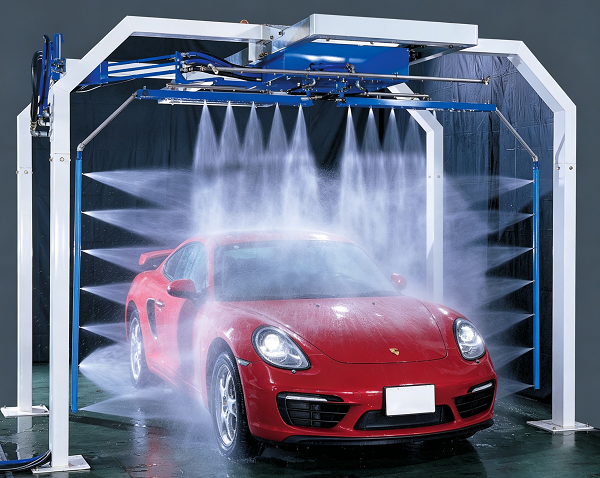
The reciprocating car washer features a streamlined design, allowing vehicles to be securely parked while the gantry frame moves back and forth to complete the entire cleaning cycle—including foam application and air drying. The equipment occupies minimal space, is cost-effective, has a low failure rate, delivers higher cleaning precision, and ensures thorough cleaning of all vehicle corners. However, its washing speed is relatively slow, resulting in longer processing times per vehicle. The optimal selection depends on site conditions and customer traffic:
tunnel-type systems are preferred for high-volume commercial facilities, while reciprocating car washers are recommended for small-to-medium retail outlets prioritizing cost efficiency, compact footprint, and superior cleaning performance.
The Functional Roles and Application Scenarios of Various Nozzles in the Car Washing Industry
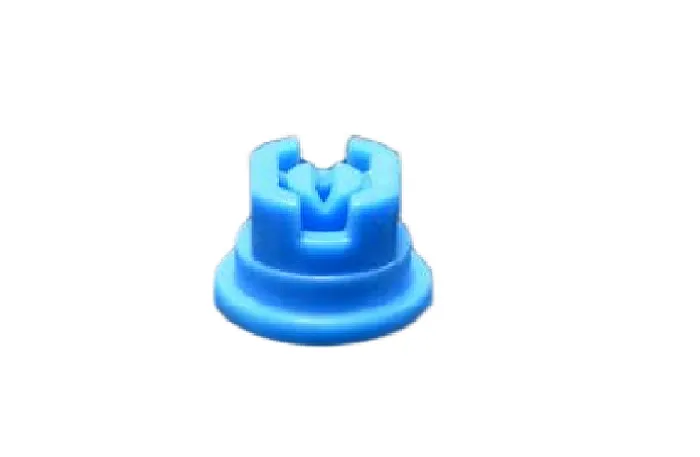
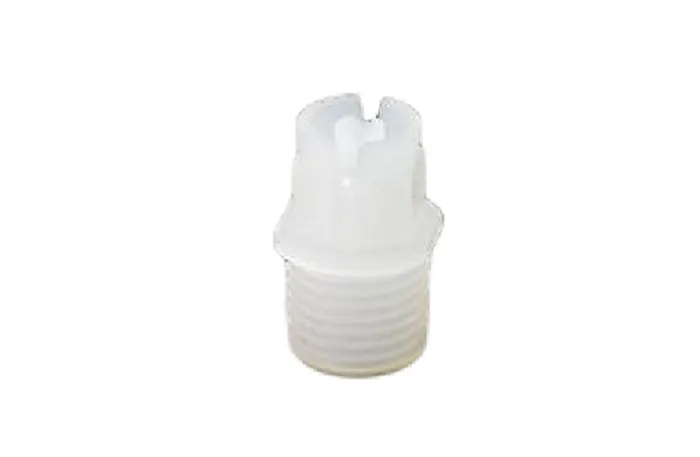
The nozzle is the core fluid component of fully automatic car wash machines, determining the cleaning intensity, uniformity, and water-saving efficiency. Tunnel-type and reciprocating car wash machines are equipped with different types of nozzles to accommodate various washing processes. Common nozzles used in car wash machines include fan-shaped nozzles, conical nozzles, and high-pressure direct nozzles, each designed for specific cleaning procedures.
The sector nozzle offers extensive coverage and uniform water pressure, making it ideal for large-area water rinsing and foam spraying on vehicle bodies. It rapidly penetrates stains without damaging the paint, serving as the primary spray component of the system. The conical atomization nozzle fine-mizes water flow, primarily used for foam generation, pre-soaking, paint surface humidification, and softening mud and dirt to enhance cleaning effectiveness. The high-pressure direct spray nozzle delivers concentrated water pressure and strong impact force, effectively targeting stubborn stains and hard-to-reach areas such as wheel hubs, underbody surfaces, and crevices.
The tunnel-type car washer is equipped with multiple sets of fixed nozzles to ensure continuous and rapid vehicle washing, while the reciprocating-type car washer features mobile spray nozzles for precise coverage of vehicle edges and corners. The coordinated use of these various nozzles not only enhances washing efficiency and reduces paint surface damage but also effectively conserves water, serving as a critical component for the stable operation of fully automated car washing systems.