Wastewater treatment plants depend on stable flow measurement to balance incoming water volume, chemical dosing, filtration, circulation, and treated-water discharge. However, not every measurement point handles the same liquid. Raw wastewater may contain suspended solids and debris, while clarified water, dosing chemicals, and recycled process water are often much cleaner.
A paddle wheel flow meter can be an efficient choice for these cleaner liquid lines. It offers responsive velocity measurement, relatively simple installation, and signal output for local displays or control systems. The application must still be reviewed carefully because solids, chemical compatibility, pipe conditions, and installation layout can influence measurement performance.
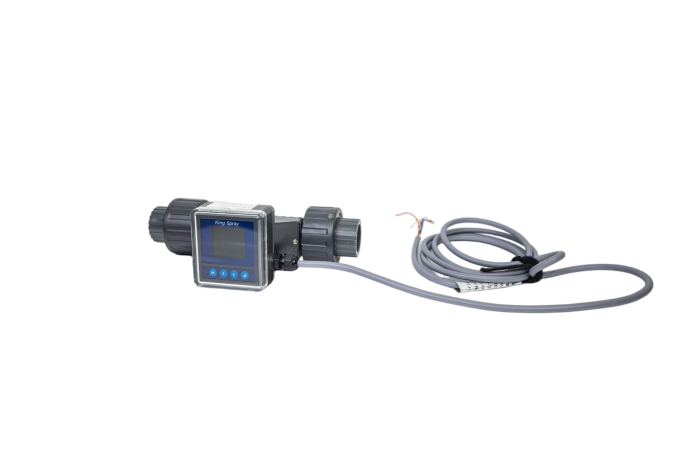
Kingspray supplies paddle wheel meters for water treatment and chemical-processing applications. Our NF3032 AxleSense model is available in PP, UPVC, and PVDF materials and incorporates paddle-condition monitoring for improved operational visibility.
Wastewater treatment generally includes pretreatment, primary separation, biological or chemical treatment, filtration, and final discharge or reuse. Flow meters may be installed on influent and effluent lines, circulation loops, chemical dosing systems, filter feeds, backwash lines, and reclaimed-water pipelines.
A paddle wheel meter is usually better suited to clean or reasonably filtered liquids than to untreated wastewater containing large particles, fibers, sludge, or heavy sediment. Because its measuring wheel is exposed to the liquid, solid matter can obstruct rotation or increase wear.
Suitable wastewater-treatment measurement points may include:
Clarified-water transfer lines
Filtered effluent pipelines
Reclaimed-water distribution
Membrane system feed and rinse lines
Acid, alkali, and compatible chemical lines
Cooling or equipment-washing water
Low-solids circulation systems
Raw influent and sludge lines often require another technology because the wastewater may contain material capable of fouling or damaging a mechanical sensor. Selecting the meter according to the actual liquid condition is therefore more important than using one meter type throughout the entire plant.
A paddle wheel flow sensor contains a small rotating wheel positioned in the liquid stream. As liquid moves through the pipe, it drives the wheel. The rotation speed changes with the liquid velocity, and the sensor converts this movement into an electrical signal.
A display, transmitter, programmable logic controller, or monitoring system can then convert the signal into flow rate or totalized volume. This allows operators to observe whether a line is operating within its intended range and to identify unexpected reductions or increases in flow.
For consistent measurement, the pipe should remain full, and the flow profile around the sensor should be stable. Elbows, valves, pumps, reducers, and other fittings can disturb the flow, so sufficient straight pipe is generally required upstream and downstream. The exact straight-run requirement should follow the selected meter’s installation manual because it varies according to nearby pipe components.
A paddle wheel water flow meter can be used for treated water, wash water, cooling water, and other clean-water services within a wastewater facility. Selection should begin with the pipe size and expected operating range rather than the maximum pump capacity alone.
The normal flow should remain within the effective measuring range of the meter. A model that is too large may respond poorly at low flow, while an undersized model may experience excessive velocity and mechanical wear.
Important selection factors include:
| Selection factor | What to confirm |
|---|---|
| Pipe size | Actual internal diameter and connection method |
| Flow range | Minimum, normal, and maximum operating flow |
| Liquid quality | Solids, fibers, bubbles, and possible deposits |
| Temperature | Normal and maximum process temperature |
| Pressure | Working pressure and possible pressure surges |
| Output | Pulse, analog, alarm, or system-integration requirements |
| Installation | Available straight pipe and sensor access |
Filtration should also be reviewed. Even when the main liquid appears clean, particles released from tanks, aging pipes, or treatment equipment may reach the sensor. A suitable strainer or upstream filtration stage can reduce blockage risk where the process permits it.
A paddle type flow meter may also be used for chemical dosing and transfer lines when the fluid is clean, compatible with the meter materials, and within the approved temperature and viscosity range.
Material compatibility is especially important. A material suitable for treated water may not withstand concentrated acid, alkali, oxidizing agents, or other treatment chemicals. The complete wetted assembly—including the body, wheel, axle, seals, and sensor components—must be checked against the chemical concentration and temperature.
Kingspray’s NF3032 model is offered in PP, UPVC, and PVDF configurations for different fluid environments, with a stated operating-temperature range of up to 100°C depending on the selected material and configuration. Its sensing design can also monitor paddle-related abnormalities, helping operators recognize conditions that may affect measurement.
Chemical-line selection should consider:
Exact chemical name and concentration
Operating and cleaning temperatures
Normal flow and dosing range
Fluid viscosity and tendency to crystallize
Possibility of gas bubbles
Required control-system output
Maintenance and calibration access
For very low-volume dosing, highly viscous liquids, or chemicals that crystallize easily, another meter technology may provide more dependable performance.
Understanding other wastewater flow meter types helps determine where paddle wheel technology is appropriate and where an alternative is needed.
| Flow meter type | Suitable application |
|---|---|
| Paddle wheel | Clean water, filtered effluent, and compatible chemical lines |
| Electromagnetic | Conductive wastewater, raw influent, and liquids containing suspended solids |
| Ultrasonic | Non-invasive measurement or large pipes, depending on liquid and sensor type |
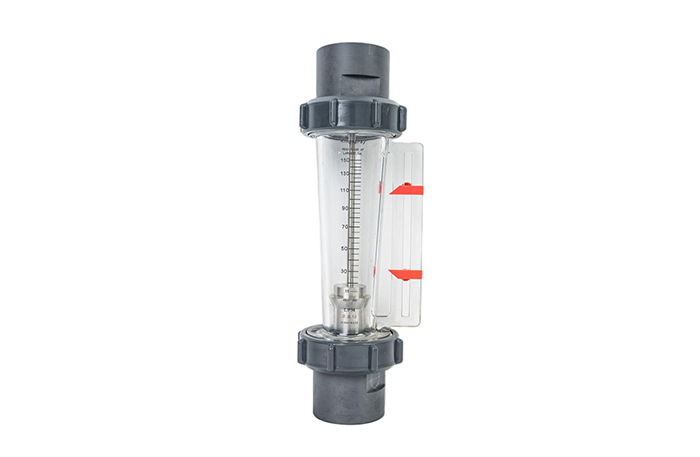
| Rotameter | Local visual indication on smaller clean-liquid or chemical lines |
Electromagnetic meters are frequently considered for untreated wastewater because they have no rotating measuring element in the flow path and can handle many conductive liquids containing solids. Ultrasonic meters may be useful where pipe cutting should be avoided, although their suitability depends on whether transit-time or Doppler technology is used and on the liquid condition.
A paddle wheel meter remains attractive for clean lines where simple installation, responsive output, and practical maintenance are priorities. It should not be selected merely because it is less complex than another technology.
Installation quality directly affects measurement stability. The sensor should be mounted where the pipe remains full and where air cannot collect around the paddle. The flow-direction marking and insertion depth must also be correct.
Avoid installing the meter immediately after a pump, valve, elbow, or reducer unless the manufacturer’s required straight run is available. The sensor should also remain accessible for inspection without requiring major pipe disassembly.
Routine maintenance should include:
Inspecting the paddle for deposits or trapped particles
Confirming that the wheel rotates freely
Checking seals and fittings for leakage
Comparing readings with pump or process data
Cleaning only with chemically compatible methods
Inspecting upstream filtration
Verifying signal and alarm operation
The NF3032 AxleSense design provides real-time monitoring intended to identify paddle abnormalities and support planned inspection or replacement. This feature can help plants detect sensor problems before they cause prolonged measurement errors.
It is generally more suitable for clean or filtered liquids. Raw wastewater containing solids, fibers, or sludge may block the paddle or accelerate wear, so an electromagnetic or another wastewater-compatible meter may be preferable.
Yes, provided the liquid is clean and all wetted materials are compatible with the chemical concentration, temperature, and pressure.
Yes. A partially filled pipe can prevent the sensor from measuring a representative liquid velocity and may produce unstable readings.
Straight pipe helps create a more stable flow profile. Elbows, pumps, valves, and reducers can produce turbulence that affects the velocity measured at the sensor.
The interval depends on liquid cleanliness, chemical properties, and operating hours. Plants should establish an inspection schedule based on initial operating experience and any change in reading stability.
A paddle wheel flow meter can provide practical flow monitoring for clarified water, filtered effluent, reclaimed water, and compatible chemical lines in wastewater treatment facilities. Reliable selection requires a clear understanding of liquid cleanliness, pipe size, operating range, chemical compatibility, output requirements, and installation conditions.
For lines containing heavy solids or untreated wastewater, another flow meter technology may be more appropriate. By assigning each meter type to the process conditions it can handle, wastewater plants can improve measurement reliability, chemical control, and day-to-day operating efficiency.

 English